1. The Sacred Spiral of Garba
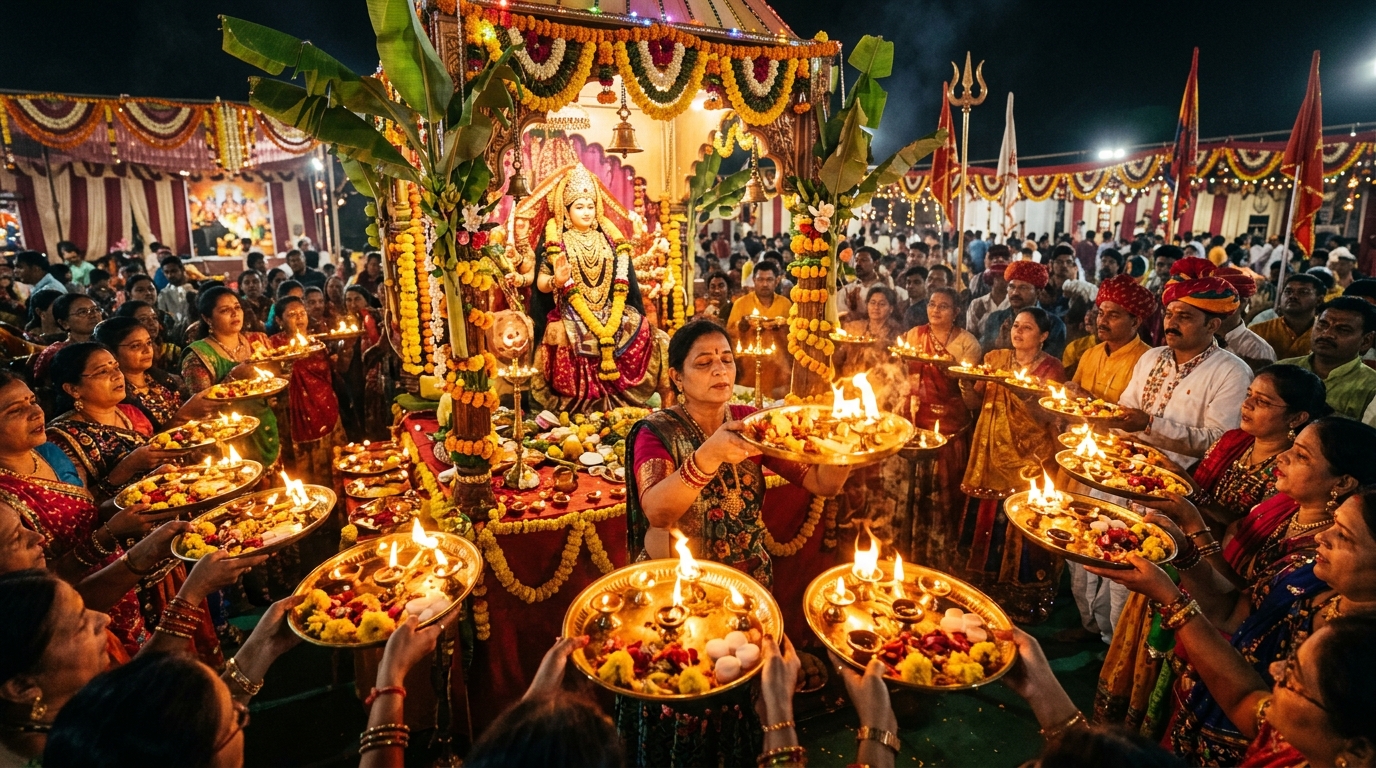
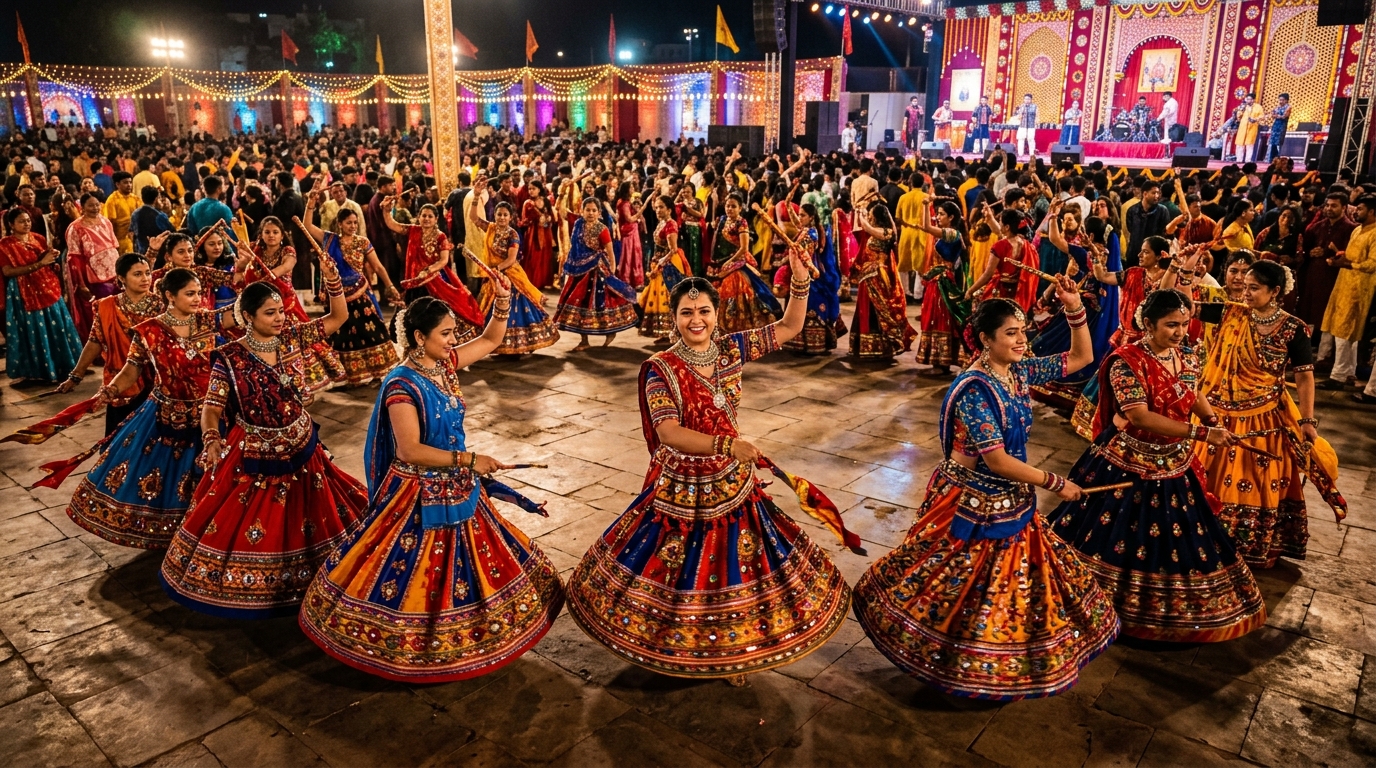
The word Garba is derived from the Sanskrit word Garbha, signifying the womb of life. Traditional Garba is always danced in expanding concentric circles around an illuminated earthen pot (Garbi) containing a sacred flame or an idol of Maa Durga / Maa Amba.
As dancers move counter-clockwise around the centre, their movements symbolize the cyclical nature of time—birth, life, death, and rebirth—with the Divine Mother remaining the unchanging anchor of the universe.
2. Be-Taali (Two-Clap) Grace and Rhythm
Be-Taali (Two-Clap) is the most elegant, foundational step of Gujarati Garba. It sets a graceful, gentle tempo early in the evening as dancers warm up to the acoustic rhythms of lead singer Nishad Soni.
How to Execute Be-Taali
- Count 1: Step forward on your right foot with a slight knee bend, sweeping both arms upwards to your right side and clapping gracefully.
- Count 2: Step forward on your left foot, pivoting slightly to your left, clapping smoothly at chest level.
- Rhythm: Maintain a gentle swaying torso movement (Lachak) while traveling forward along the circumference of the circle.
3. Tran-Taali (Three-Clap) Hand & Foot Coordination
Tran-Taali (Three-Clap) introduces dynamic angular footwork and a complete spin, forming the core rhythm of traditional Gujarati festival nights.
Tran-Taali Step Breakdown
- Clap 1 (Right): Step right foot diagonally forward, clap hands at shoulder height towards the right.
- Clap 2 (Left): Cross left foot across right, clap hands towards the left side at waist level.
- Clap 3 (Spin): Pivot on the balls of your feet in a 360-degree clockwise spin, clapping hands upwards over your head as you complete the turn.
4. Dodhiyu (One-and-a-Half Step) Variations
Dodhiyu translates literally to "one and a half". It is an intricate, syncopated rhythm pattern where dancers move one-and-a-half steps forward and backward, often featuring complex hand flourishes and toe-heel taps.
Dodhiyu steps range from classic 6-step and 8-step sequences up to elaborate 12-step and 16-step group choreography. When hundreds of dancers in matching Chaniya Cholis and Kediyus execute Dodhiyu in unison, the visual spectacle is breathtaking.
5. High-Paced Hinch & Fast Spins
As midnight approaches, the master dholis shift into Hinch (a lightning-fast 6/8 and 4/4 folk meter). Dancers interlock elbows or dance in tight, energetic clusters, executing rapid forward leaps and low spinning squats.
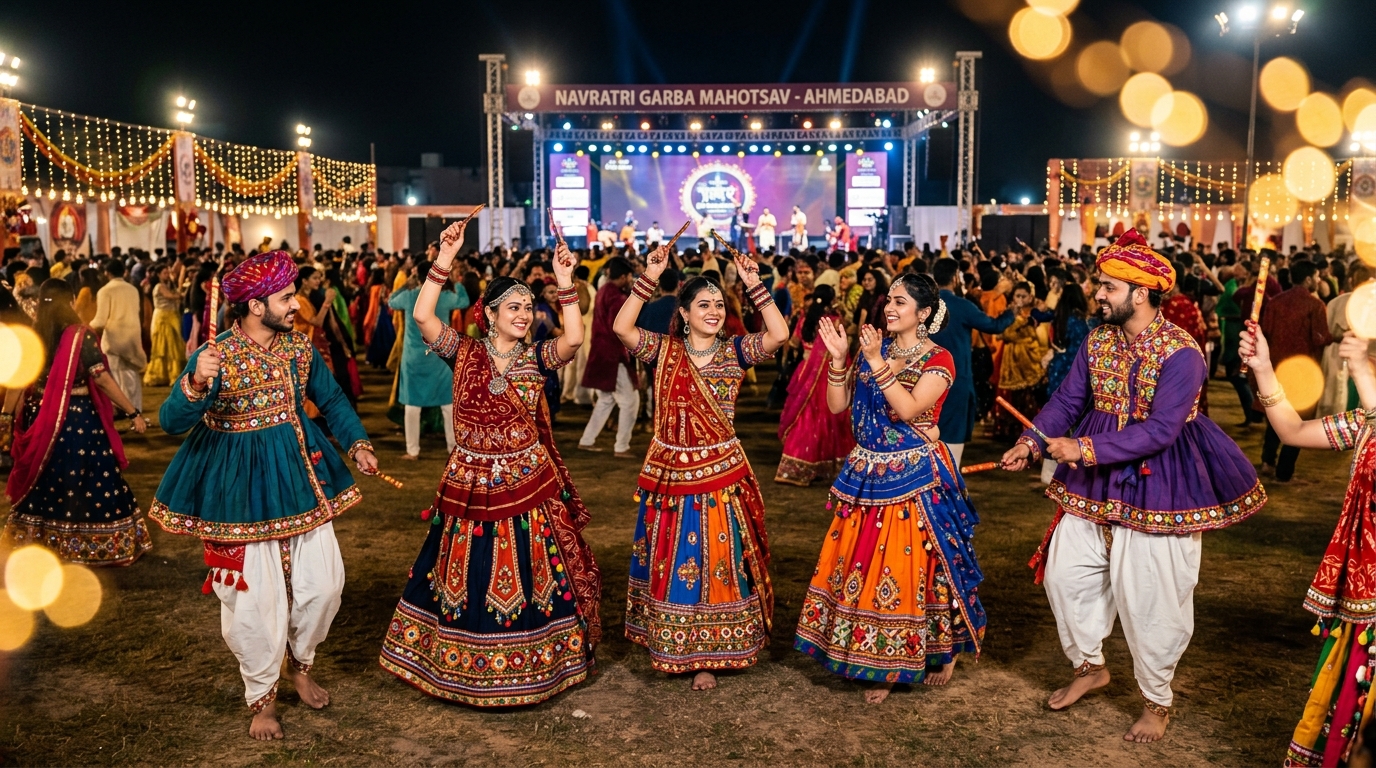
At Mandavadi Navratri, the natural grass turf at Nidhivan Party Plot provides a cushioned, non-slip surface, allowing dancers to spin effortlessly for hours without foot fatigue.
6. Essential Garba Circle Etiquette
- Choose the Right Circle: Beginners should join outer, slower circles. Advanced dancers naturally occupy inner, fast circles.
- Match the Flow: Always move in the direction of the circle (counter-clockwise) to avoid collisions.
- Keep Spacing: Allow at least two feet of arm clearance between you and neighboring dancers.
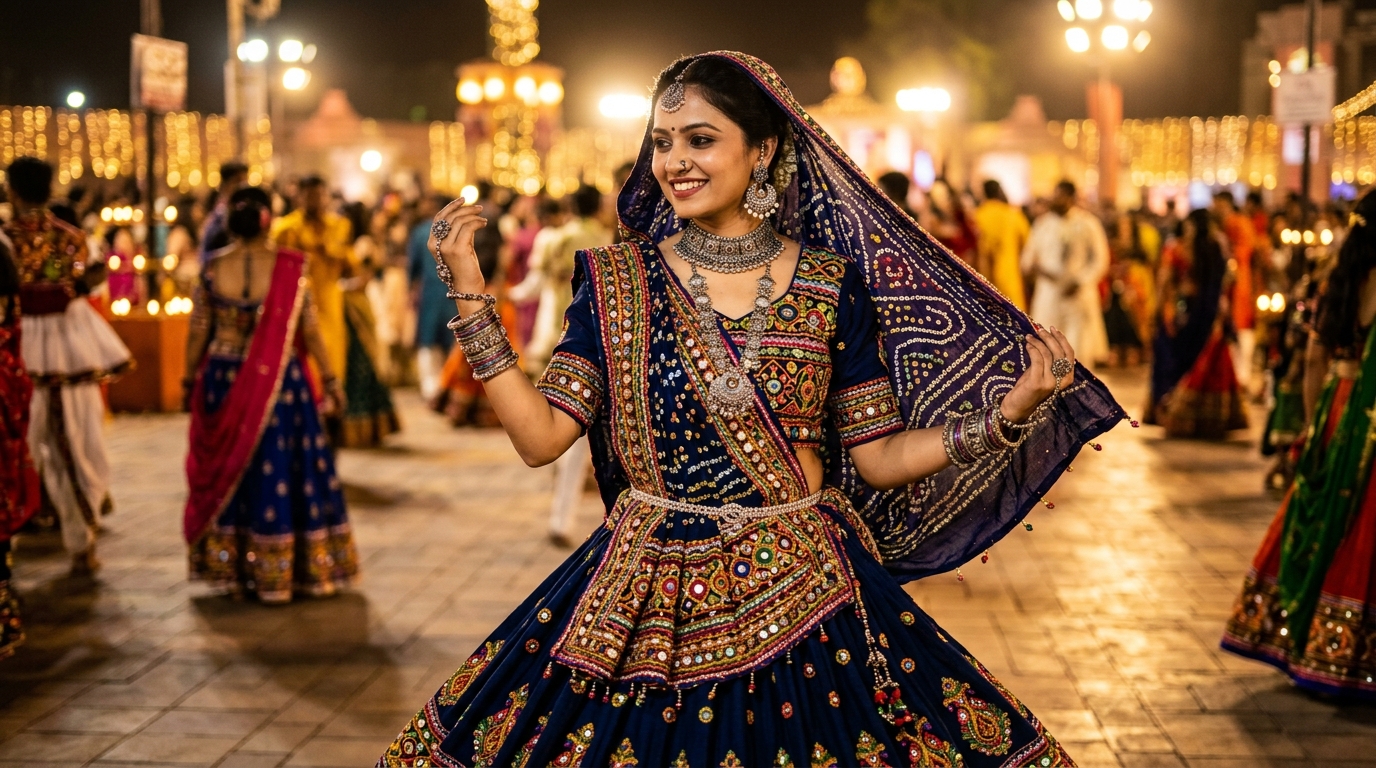
- Wear Appropriate Footwear: Traditional embroidered mojdis with cushioned insoles or barefoot dancing on lawn turf.
Frequently Asked Questions
What is the difference between Garba and Dandiya Raas?
Garba is a circular hand-clapping dance performed in devotion to the central Garbi/Goddess shrine, while Dandiya Raas is played in paired opposing lines using wooden polished sticks (dandiyas) celebrating Krishna and the Gopis.
Can beginners join the Garba circles at Mandavadi?
Yes! The outer circles move at a steady, welcoming tempo perfect for beginners enjoying 2-Taali and 3-Taali steps, while intermediate and advanced dancers gravitate towards inner energetic circles.