1. The Sacred Clay Garbo & Inner Divine Light
At the centre of every authentic Garba circle sits the Garbo—an earthen clay pot with multiple perforations containing a glowing oil diya (lamp).
In Vedic philosophy, the clay pot represents the human body (earthen, temporary), the perforations represent sensory windows, and the inner flame symbolizes the immortal divine soul (Atman) illuminated by the grace of Maa Amba.
2. Suryast Maha Aarti: Welcoming the Goddess
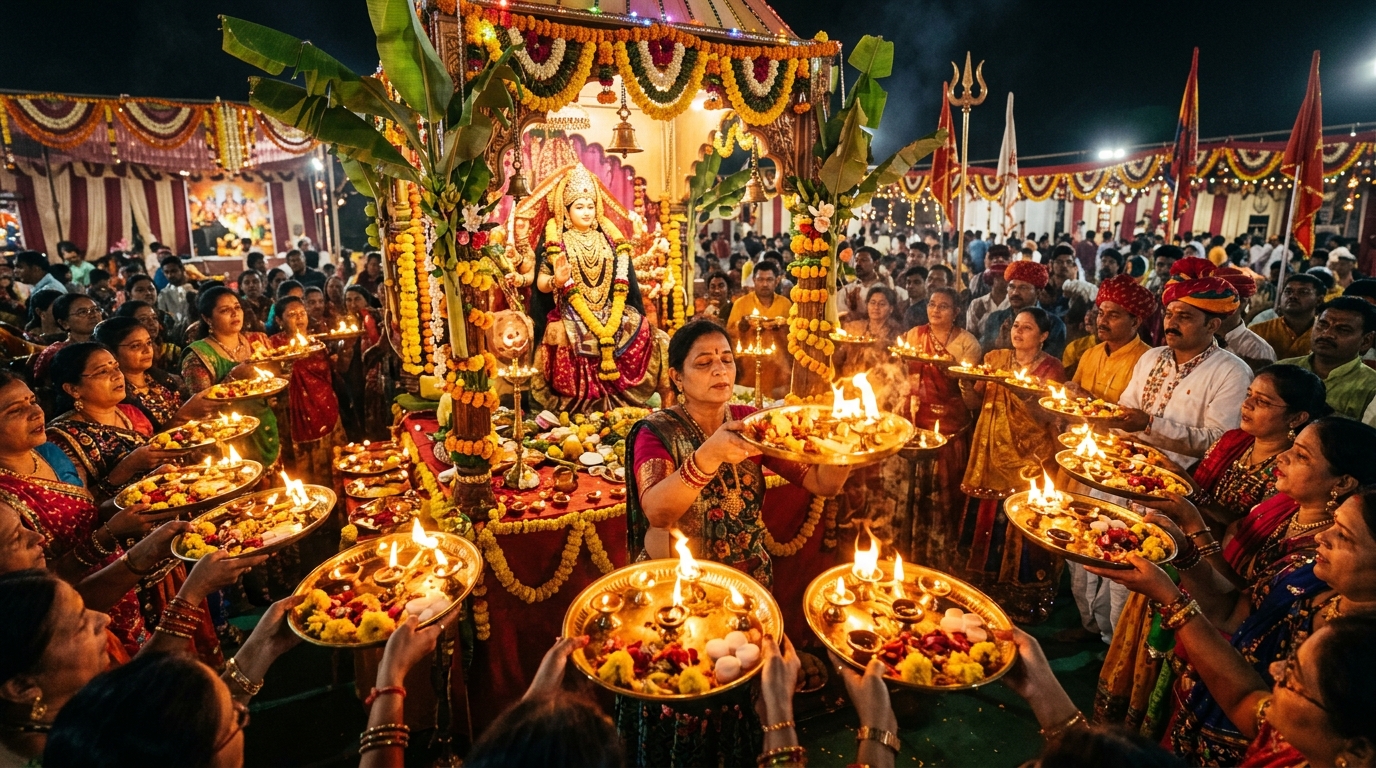
Each evening at Mandavadi begins with the collective chanting of the Jay Adhya Shakti Aarti. Devotees raise illuminated brass thalis in synchronized circles of praise.
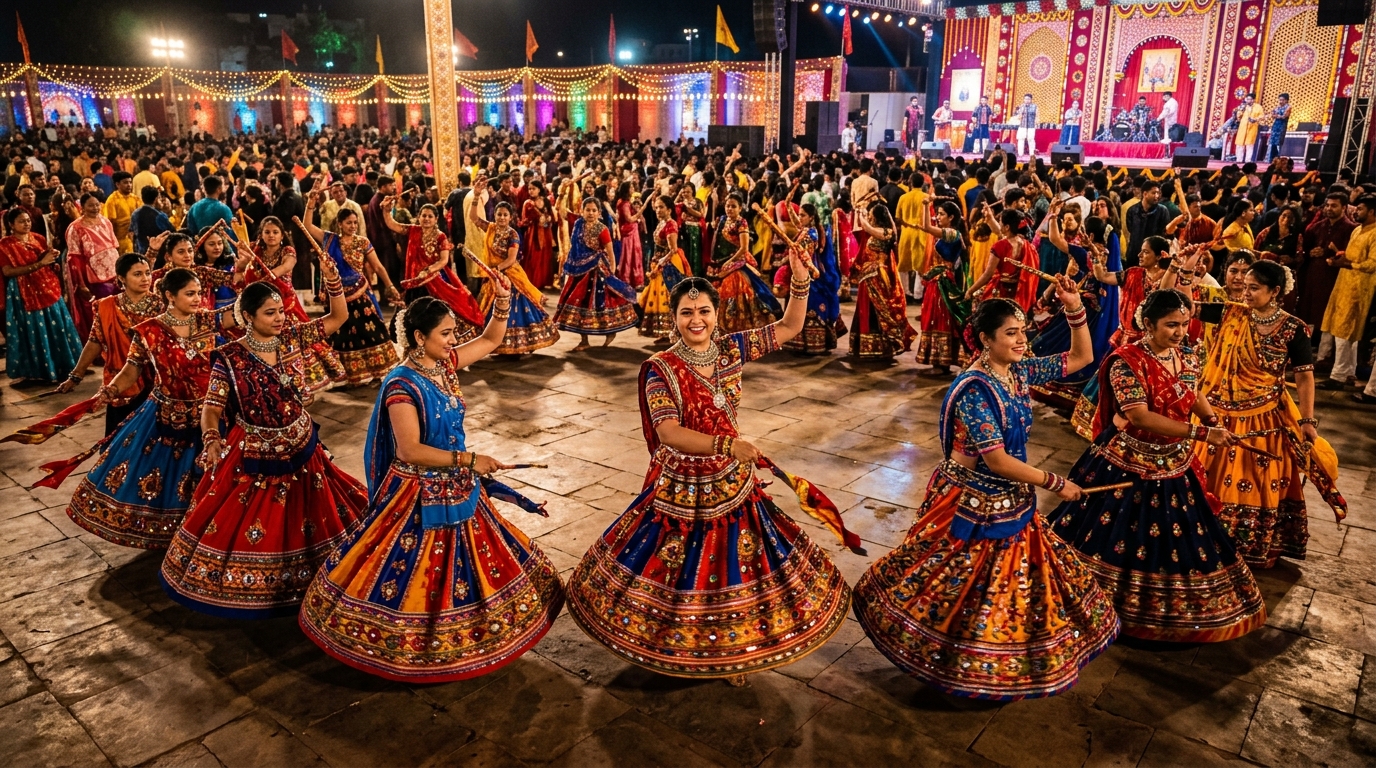
This opening ritual grounds the entire festival in devotion and respect before the lively circular Garba dance commences.
3. Chanting Vishwambhari Stuti & Sacred Hymns
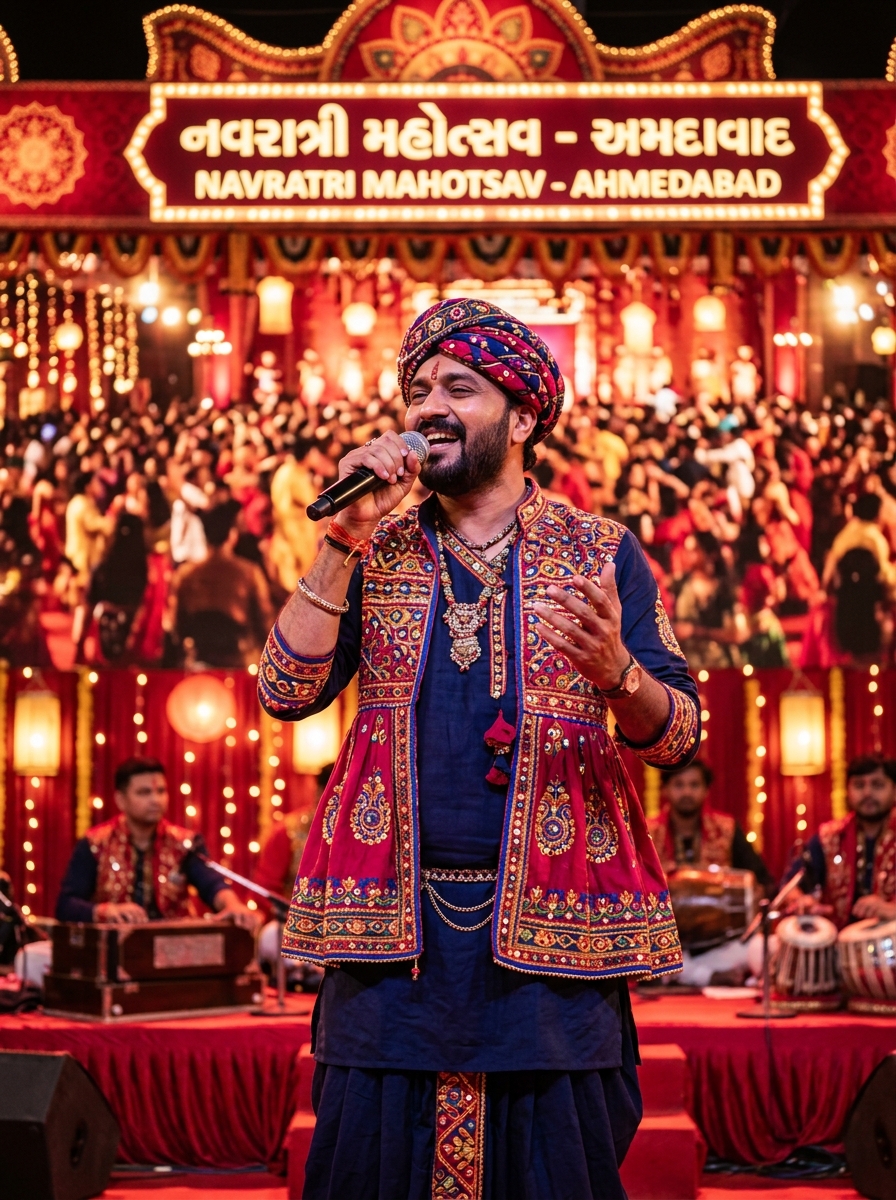
Lead vocalist Nishad Soni leads the assembly through sacred Gujarati stutis including the revered Vishwambhari Akhil Vishwa Tani Janeta. Sung in classical rāgas with harmonium and acoustic percussion, these hymns elevate the atmosphere into pure devotional ecstasy.
4. Sacred Prasad Distribution and Unity
Following the midnight prayers, sanctified prasad (panchamrut, dry fruits, fresh coconut, and pedas) is distributed among all devotees. Navratri in Gujarat breaks all barriers of background and status, uniting everyone in gratitude.
Frequently Asked Questions
What does the word 'Mandavadi' signify?
Mandavadi translates to the sacred canopy or sanctuary of worship where devotees gather under Maa Amba's divine blessings for heartfelt prayer, song, and traditional Garba.