1. The Devotional Heart of Gujarat
Every autumn during the sacred Hindu month of Ashwin, the city of Ahmedabad undergoes a breathtaking metamorphosis. For ten consecutive nights, normal bedtime schedules cease to exist. Streets glisten with warm fairy lights, the fragrance of burning camphor and fresh marigold garlands permeates the night breeze, and the resonant thud of the double-headed acoustic Dhol echoes from every neighborhood.
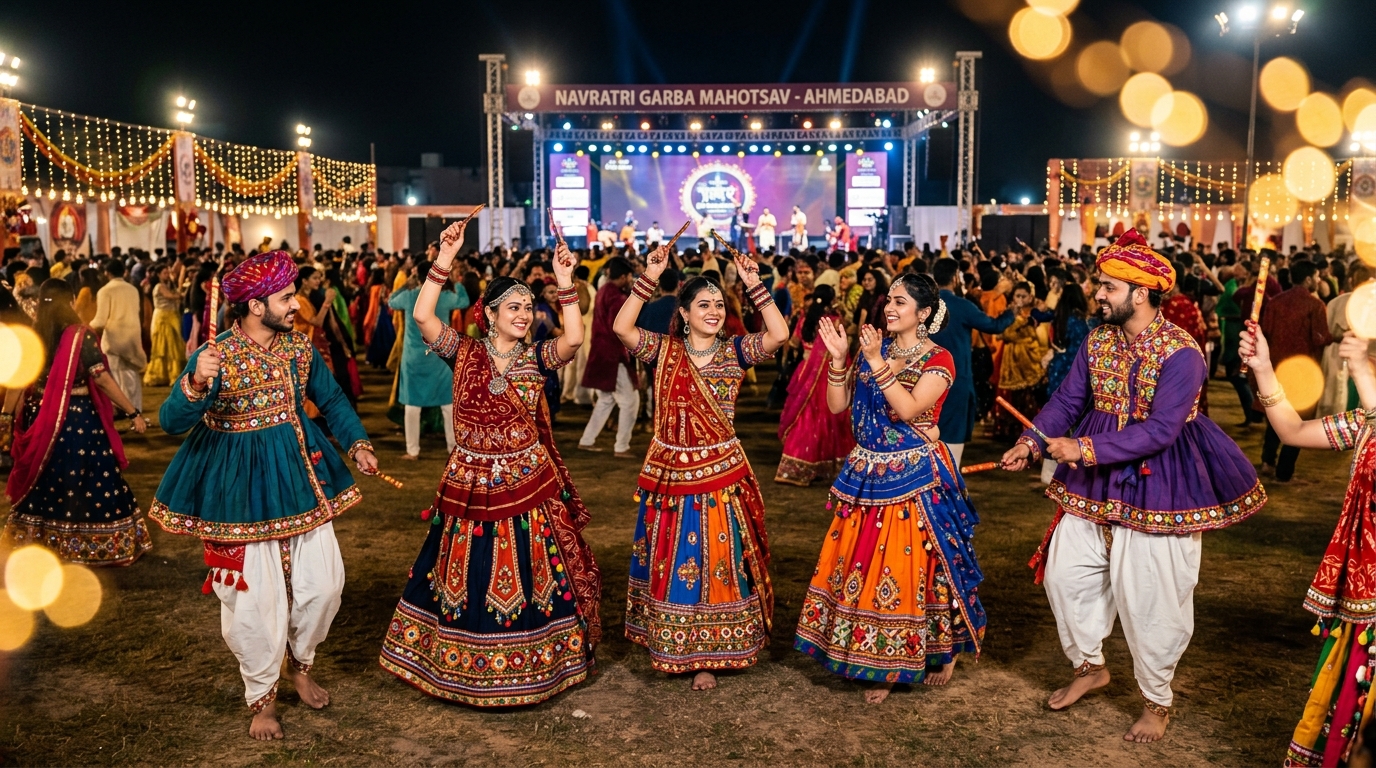
While festivals around the world are celebrated with concerts or parades, Navratri in Ahmedabad is fundamentally participatory. There are no passive spectators here—everyone is a dancer, a devotee, and an active participant in the ancient spiral of life known as Garba.
"Garba in Ahmedabad is not merely a dance performance; it is a living, breathing tapestry of devotion where thousands move as one unified heartbeat in devotion to the Divine Mother."
2. Historic Pol Garba to Sprawling Party Plots
The architectural landscape of Ahmedabad provides two distinct yet equally mesmerizing Garba environments:
The Intimacy of Historic Pols
In the UNESCO World Heritage walled city of Old Ahmedabad, Garba is celebrated inside intimate communal courtyards known as Chowks. Here, generations of families gather around ancient earthen Garbis, clapping to age-old rhythmic folk verses passed down across centuries.
The Grandeur of Open-Air Festival Lawns
Across modern Ahmedabad—along SP Ring Road, Sindhu Bhavan Road, and SG Highway—Garba expands into expansive open-air lawns. Venues like Nidhivan Party Plot host festival gatherings where thousands of dancers form concentric, synchronized circles beneath starlit skies. These grounds balance expansive lawn space with acoustic authenticity, creating a safe, joyous, and culturally rooted environment for families and youth alike.
3. Why Live Folk Musicians Drive the Night
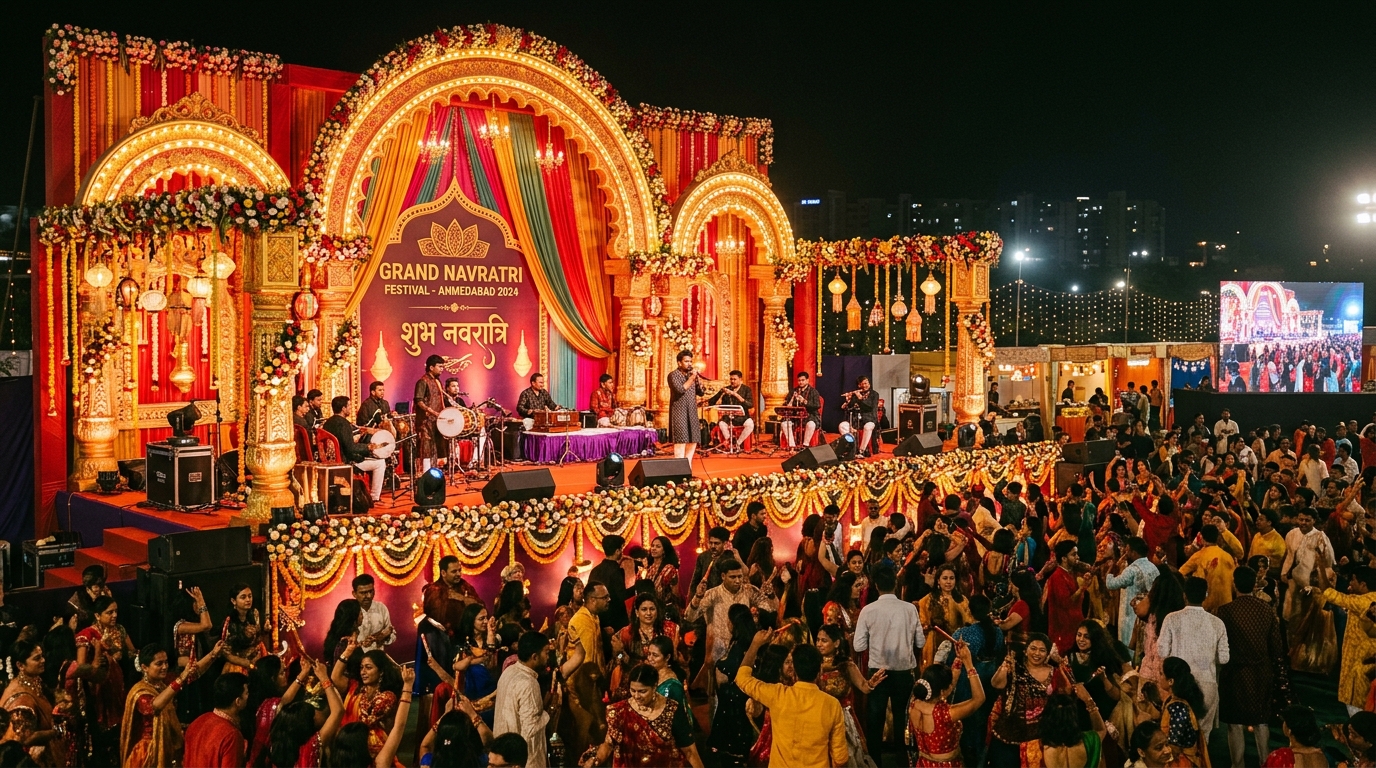
What truly distinguishes the Ahmedabad Navratri experience from modern commercial club events is its steadfast dedication to live acoustic music. Dancers in Ahmedabad do not dance to pre-recorded digital tracks; they respond in real-time to the vocal nuances of master Gujarati folk singers.
At Mandavadi Navratri, lead vocalist Nishad Soni and an authentic acoustic folk orchestra guide dancers through shifting tempos—from solemn devotional stutis in the evening to high-velocity Dodhiyu and Hinch rhythms as the night deepens. Learn more about our musical ensemble on our performers guide.
4. Sunset to Sunrise: The 10-Night Celebration
A typical Garba night in Ahmedabad follows a sacred, time-tested progression:
Chronology of an Ahmedabad Garba Night
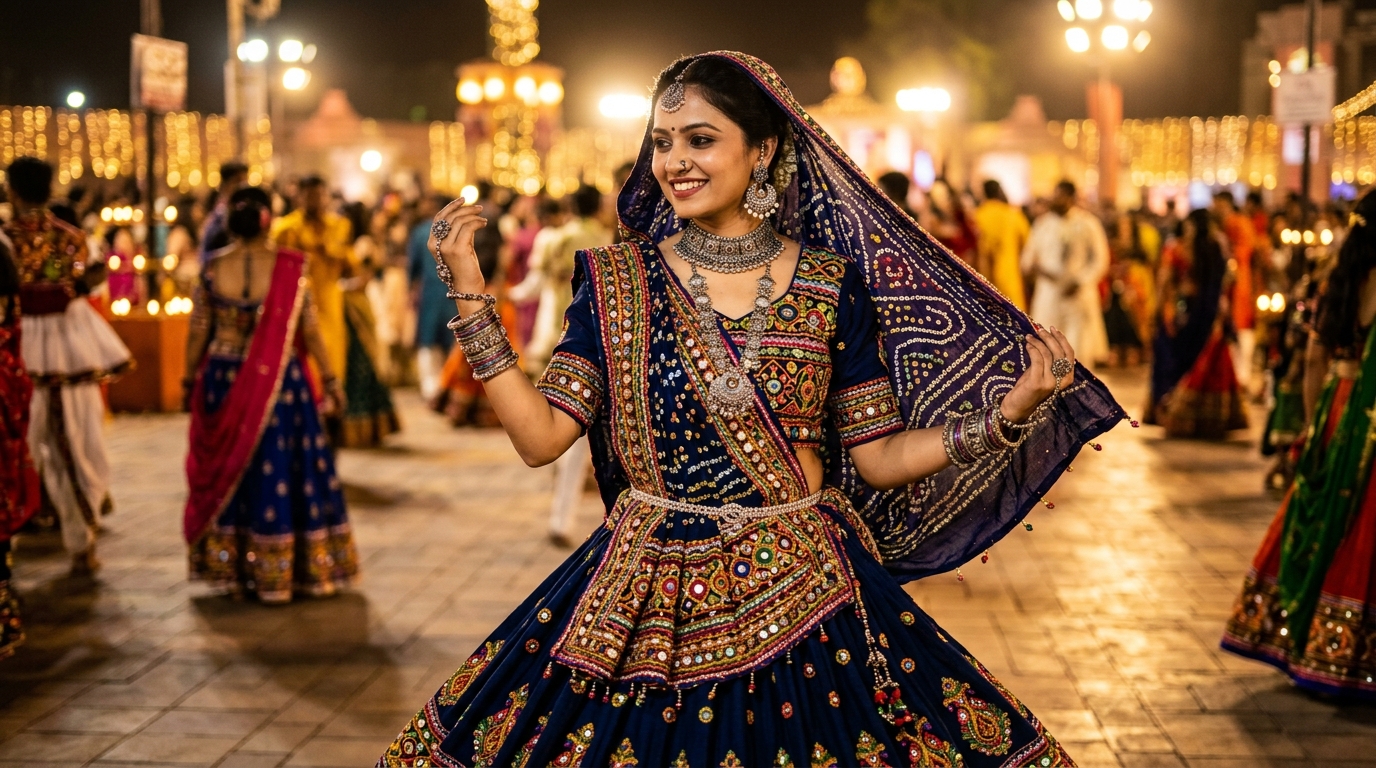
- 8:00 PM – 8:45 PM: Arrival of families in traditional Kutchi and mirror-work attire.
- 8:45 PM – 9:15 PM: Auspicious lighting of the sacred Garbi and community Maha Aarti.
- 9:15 PM – 11:30 PM: Traditional slow-to-medium paced 2-Taali and 3-Taali Garba circles.
- 11:30 PM – 1:30 AM: Energetic Dodhiyu, Raas, and synchronized partner footwork.
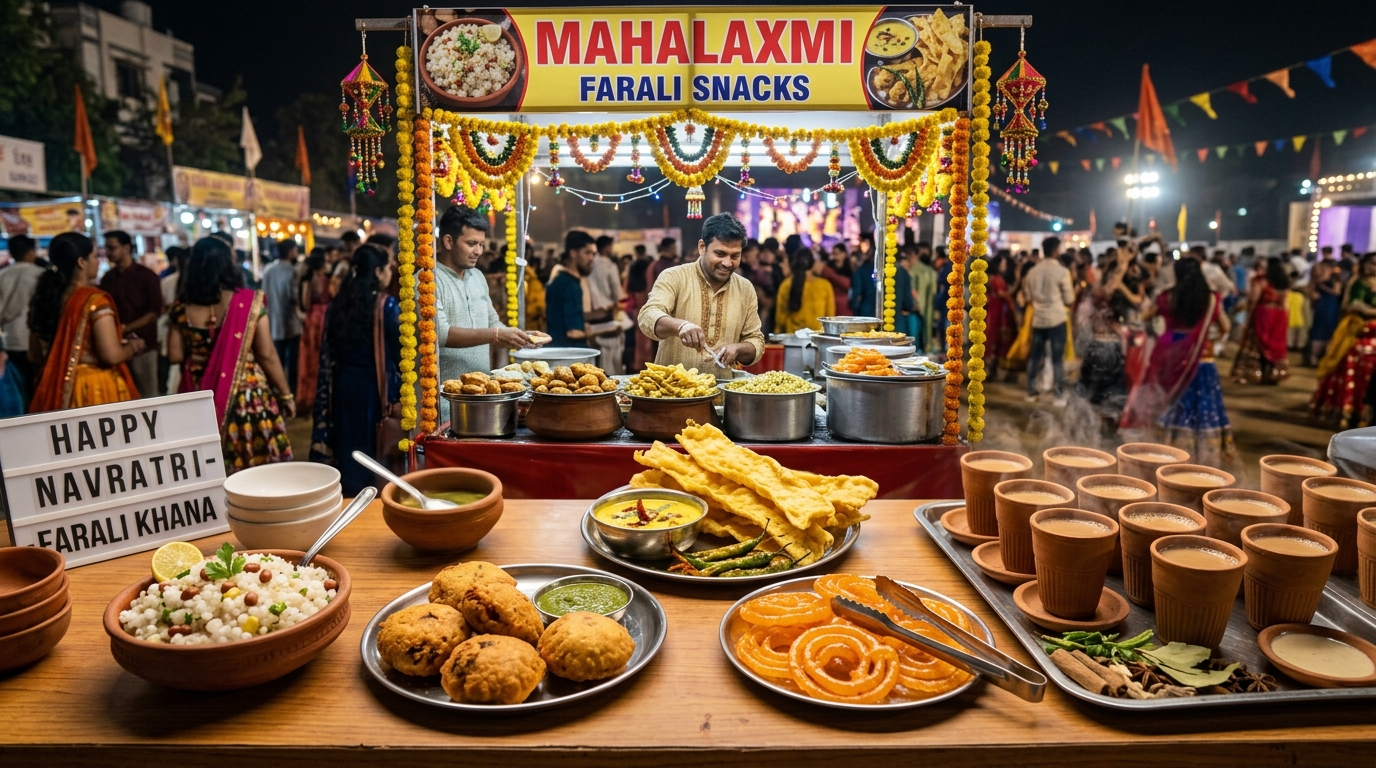
- 1:30 AM – Dawn: High-octane Sanedo, fast Hinch, followed by midnight Farali snacks and kulhad chai.
5. The Mandavadi Experience at Nidhivan Party Plot
If you are planning to experience Navratri in Ahmedabad, Mandavadi offers an unmatched fusion of cultural purity, safety, and community spirit. Set on the lush manicured lawns of Nidhivan Party Plot, Mandavadi provides:
- Pure Live Folk Vocals: Soulful performances by Nishad Soni without synthetic synthesizers.
- Traditional Dress Code: Maintaining the visual splendor of authentic Gujarati heritage.
- Family-First Security: Controlled entry, CCTV surveillance, and dedicated valet parking.
- Gourmet Farali Court: Hygienic fasting-approved Gujarati delicacies and late-night refreshments.
Read our full breakdown in the Mandavadi Navratri Complete Guide or discover what to wear in our Navratri Fashion Styling Guide.
Frequently Asked Questions
Why is Ahmedabad considered the capital of Navratri celebrations?
Ahmedabad is where Navratri is celebrated in its purest communal form, uniting millions across pol courtyards and expansive festival grounds in synchronized circular worship of Maa Amba.
What time does Garba start and end in Ahmedabad?
Festivities typically begin with the auspicious evening Aarti around 8:30 PM, with circular 2-Taali and 3-Taali Garba progressing through midnight Dodhiyu and concluding in the early dawn hours.